
Why Mobile-First Design Matters More Than Ever in 2026

Mobile-first design is no longer a trend or optional best practice. It has become a foundational approach to building digital experiences that meet modern user behavior, search engine requirements, and performance expectations. As mobile devices continue to dominate how people access the internet, businesses that fail to prioritize mobile experiences risk losing visibility, engagement, and revenue. This guide explores why mobile-first design matters more than ever, how it impacts SEO and user experience, and what principles define an effective mobile-first strategy. Understanding the Mobile-First Design Approach Mobile-first design is a design and development strategy where the mobile version of a website or application is created before the tablet or desktop versions. Instead of shrinking a desktop layout to fit smaller screens, designers begin with the smallest screen and progressively enhance the experience for larger devices. This approach forces teams to focus on what truly matters: essential content, core functionality, and usability under constraints such as limited screen space and variable network conditions. Industry design publications consistently emphasize that mobile-first is not just about layout but about prioritization and clarity in user experience. The Shift in How People Access the Internet Mobile Devices Now Dominate Web Traffic Mobile usage has surpassed desktop usage globally. Research cited across UX and digital strategy sources shows that more than 60% of global web traffic comes from mobile devices, making mobile the primary way users interact with websites today This shift means websites designed primarily for desktop users no longer reflect real user behavior. Mobile-first design aligns digital experiences with how audiences actually browse, search, and convert. Mobile Usage Is Context-Driven Mobile users often browse on the go, during short sessions, or while multitasking. Design sources highlight that mobile users value speed, simplicity, and immediate access to information more than visual complexity . Mobile-first design directly supports these behaviors by reducing friction and cognitive load. Why Mobile-First Design Is Critical for SEO Google Uses Mobile-First Indexing Google officially uses mobile-first indexing, meaning it primarily evaluates the mobile version of a website when determining search rankings. If a site’s mobile experience is slow, incomplete, or difficult to use, its visibility in search results can suffer — even if the desktop version performs well . He makes mobile-first design a direct ranking factor, not just a usability consideration. Performance and Core Web Vitals Mobile-first design naturally encourages better performance. By designing under mobile constraints, teams optimize images, reduce unnecessary scripts, and prioritize fast loading. Performance metrics such as loading speed and interactivity are part of Google’s Core Web Vitals, which influence SEO outcomes. How Mobile-First Design Improves User Experience Clear Content Hierarchy Small screens force designers to prioritize content. Mobile-first layouts highlight essential information first and remove distractions. UX research consistently shows that a clear hierarchy improves comprehension, engagement, and task completion. Touch-Friendly Interactions Mobile-first design accounts for finger-based navigation rather than mouse clicks. Buttons, spacing, and interactive elements are optimized for touch, reducing user frustration and accidental interactions. Design experts emphasize that touch-friendly interfaces significantly improve usability on mobile devices. Performance Advantages of Mobile-First Design Faster Load Times Mobile-first sites are typically lighter and faster because they are built with performance constraints in mind from the start. Faster load times reduce bounce rates and improve overall user satisfaction, especially on mobile networks where connectivity may vary. Better Stability Across Devices By starting small and enhancing upward, mobile-first design ensures consistent performance across screen sizes. Desktop layouts become enhancements rather than bloated foundations, leading to more stable and predictable user experiences. Business Impact of Mobile-First Design Higher Engagement and Conversions Mobile-optimized experiences tend to keep users engaged longer and guide them more effectively toward actions such as sign-ups, purchases, or inquiries. Industry studies cited by UX strategy blogs indicate that improved mobile usability correlates with higher conversion rates and customer satisfaction. Stronger Brand Perception A fast, intuitive mobile experience reflects positively on a brand. Users often associate mobile usability with professionalism and trustworthiness, while poor mobile experiences can damage credibility. Core Principles That Define Effective Mobile-First Design Content Before Decoration Mobile-first design emphasizes meaningful content over visual excess. Design authorities stress that stripping designs to their essentials helps users find what they need faster and improves overall clarity. Progressive Enhancement Rather than removing features for mobile, mobile-first design builds a strong core experience first, then adds enhancements for larger screens. This principle ensures accessibility, performance, and functionality across all devices. Performance as a Design Constraint Performance is treated as a design requirement, not a technical afterthought. Optimized media, efficient layouts, and minimal dependencies are integral to mobile-first thinking. Mobile-First vs Mobile-Friendly vs Responsive Design Mobile-friendly design adapts an existing desktop site to work on smaller screens, often as a secondary step. Responsive design uses flexible layouts to adjust across devices, but does not necessarily prioritize mobile needs first. Mobile-first design differs because it starts with mobile constraints and user behavior as the foundation. UX experts consistently describe mobile-first as a strategy, while responsive design is a technique used within that strategy. Why Mobile-First Design Is No Longer Optional The convergence of mobile dominance, Google’s mobile-first indexing, rising performance expectations, and evolving user behavior has made mobile-first design essential. Websites that continue to prioritize desktop experiences first risk falling behind in search rankings, usability, and customer trust. Designing for mobile first is not about excluding desktop users — it is about creating stronger, more focused experiences that scale effectively across all devices. Final Thoughts Mobile-first design matters more than ever because it aligns digital experiences with reality: how people browse, how search engines rank content, and how performance affects business outcomes. By prioritizing mobile users from the start, organizations create faster, clearer, and more effective digital products that stand the test of time.
Top UI/UX Trends Dominating in 2026: Complete Design Guide
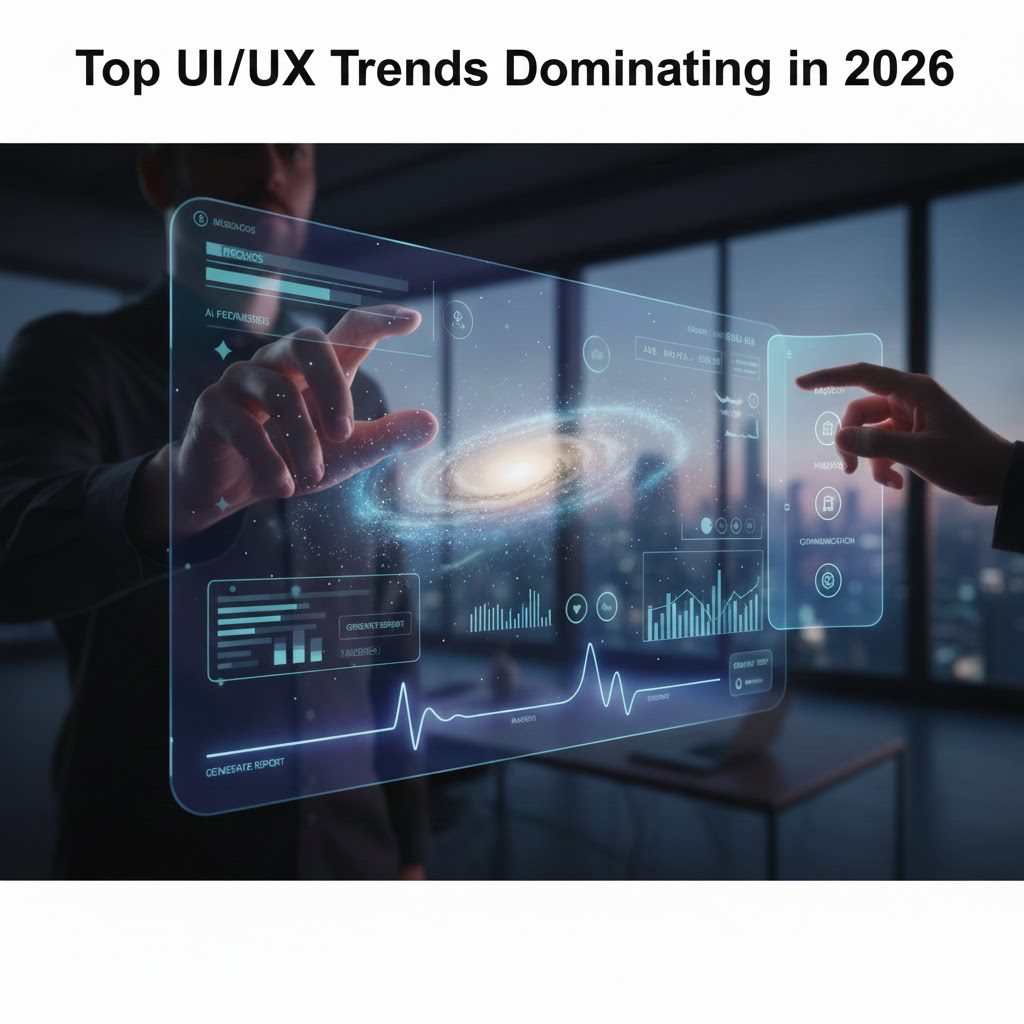
Introduction: Why UI/UX Design Is Entering a New Era in 2026 UI and UX design in 2026 is no longer just about aesthetics or usability. They are about intelligence, responsibility, and adaptability. As technology becomes more embedded in daily life, digital experiences are expected to feel intuitive, inclusive, ethical, and emotionally aware. Advancements in artificial intelligence, mixed reality, and data-driven personalization are reshaping how users interact with products. At the same time, designers are being challenged to create interfaces that protect user privacy, promote digital well-being, and reduce environmental impact. The following sections explore the most dominant UI/UX trends of 2026, backed by industry research and expert analysis. Smart Interfaces Are Redefining User Interaction Multimodal Experiences Are Becoming the New Standard In 2026, users no longer rely on a single mode of interaction. Interfaces are increasingly designed to support multiple input methods simultaneously, including touch, voice, gestures, text, and even contextual signals. This shift allows users to interact naturally depending on their environment and abilities. For example, a user might start an interaction using voice and seamlessly switch to touch without friction. Multimodal UX improves accessibility, efficiency, and overall user satisfaction, making digital experiences more human-like and flexible. AI Is Evolving from a Tool into a Design Partner Artificial intelligence in UI/UX has moved far beyond automation. In 2026, AI acts as a co-pilot within interfaces, assisting users by predicting intent, offering contextual guidance, and adapting layouts in real time. From AI-generated content suggestions to intelligent onboarding flows, designers now build experiences that continuously learn from user behavior. This approach reduces cognitive load while improving engagement, especially in complex applications like SaaS platforms and enterprise tools. Interfaces That Adapt to Individual User Behavior Personalization has evolved into adaptive UX, where interfaces dynamically change based on user preferences, habits, and context. Rather than static dashboards, users experience layouts that reorganize themselves, content that prioritizes relevance, and interactions that feel tailored without being intrusive. This trend focuses on delivering value while maintaining transparency and control, ensuring personalization enhances trust rather than undermining it. Invisible and Immersive Interaction Models Are Expanding Zero-UI and Ambient Experiences Are Gaining Momentum Zero-UI design removes traditional graphical interfaces altogether, relying on voice commands, gestures, and environmental cues. In 2026, this approach is becoming more common in smart devices, automotive systems, and IoT ecosystems. By eliminating unnecessary screens, zero-UI experiences create seamless interactions that feel natural and less distracting, particularly in hands-free or real-world scenarios. Spatial and 3D UX Is Moving into the Mainstream. Immersive design is no longer limited to gaming or experimental projects. Spatial UX, including 3D interfaces, augmented reality, and mixed reality environments, is increasingly integrated into everyday digital products. These experiences allow users to interact with content in three dimensions, improving comprehension, engagement, and realism. Designers must now consider depth, motion, and spatial orientation as core UX principles. Human-Centric UX Patterns Are Leading Design Decisions Hyper-Personalization with Ethical Boundaries While personalization remains a key UX strategy, 2026 emphasizes ethical personalization. Designers are expected to balance customization with user privacy, consent, and transparency. This means offering meaningful control over data usage, explaining personalization logic clearly, and avoiding manipulative design patterns. Ethical personalization builds long-term trust while still delivering tailored experiences. Functional Minimalism Paired with Purposeful Micro-Interactions Minimalist design continues to dominate, but with a stronger focus on functionality over aesthetics alone. Clean interfaces reduce distractions while highlighting essential actions. Micro-interactions—such as subtle animations, haptic feedback, and transition cues—play a critical role in guiding users, confirming actions, and adding personality without overwhelming the interface. Emotional and Empathetic Design Is Becoming Essential UX in 2026 increasingly acknowledges user emotions. Interfaces are designed to respond empathetically by using supportive language, calming visuals, and adaptive feedback during moments of frustration or success. This approach enhances emotional connection, improves retention, and ensures digital products feel respectful and human-centered. Inclusive and Ethical UX Is No Longer Optional Accessibility and Neuro-Inclusion Are Built-In by Default Accessibility standards are expanding to address diverse cognitive, sensory, and physical needs. Designers are focusing on inclusive typography, color contrast, motion sensitivity controls, and simplified interaction patterns. Neuro-inclusive design ensures interfaces are usable by people with ADHD, dyslexia, and other cognitive differences, making digital products accessible to a broader audience. Ethical and Transparent Design Practices Build Trust In response to growing user awareness, ethical UX design in 2026 prioritizes honesty and clarity. This includes avoiding dark patterns, making privacy settings easy to understand, and clearly communicating how user data is handled. Transparency has become a competitive advantage, reinforcing credibility and long-term user loyalty. Sustainability and Digital Wellbeing Are Core UX Principles Sustainable UX Is Influencing Design Decisions Sustainability has entered the UX conversation through energy-efficient interfaces, optimized performance, and reduced digital waste. Lightweight design choices not only improve performance but also lower environmental impact. Designers are encouraged to think beyond visuals and consider how digital products affect global resources. UX That Promotes Healthier Digital Habits Digital well-being is now a design responsibility. Interfaces are being designed to reduce cognitive overload, encourage mindful usage, and prevent burnout. Features such as usage reminders, simplified navigation, and reduced notification fatigue contribute to healthier digital interactions. Visual UI Evolution in 2026 Expressive Visual Styles Are Challenging Uniform Design While minimalism remains popular, 2026 also sees a rise in expressive and bold visual styles. Designers are experimenting with unconventional layouts, typography, and color palettes to stand out in saturated digital markets. This balance between clarity and creativity allows brands to maintain usability while expressing a unique identity. Adaptive Layouts for Multi-Device Experiences With users interacting across phones, tablets, wearables, and immersive devices, UI layouts must adapt seamlessly. Responsive design has evolved into context-aware design, adjusting not just size but structure and interaction patterns based on device and environment. Conclusion: What These UI/UX Trends Mean for the Future The UI/UX trends dominating 2026 highlight a shift toward intelligent, ethical, and human-centered design. Designers are no longer just problem-solvers; they are shaping how people interact with technology on a deeper emotional and societal