
How Personalization Drives Success in Digital Marketing
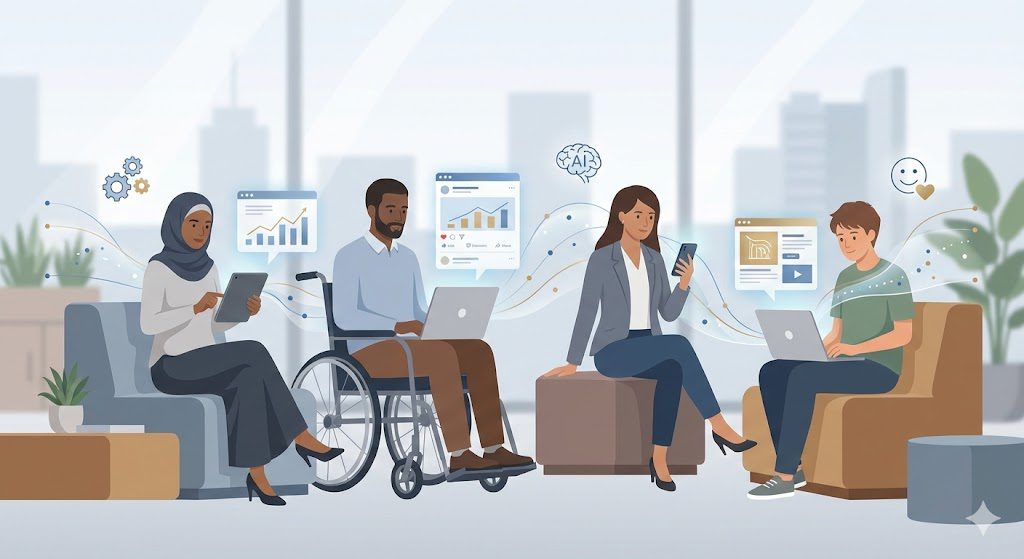
Personalization has become a defining factor in modern digital marketing. As audiences interact with hundreds of brands daily, generic messaging is no longer effective. Personalization allows businesses to tailor their communication, offers, and experiences to individual users, making marketing efforts more relevant, engaging, and impactful. What Personalization Means in Digital Marketing Personalization in digital marketing refers to the practice of delivering customized content, products, or experiences to users based on their data, preferences, and behavior. Instead of presenting the same message to every customer, brands adjust their messaging to match individual needs and interests. What a Personalized Experience Really Is A personalized experience uses customer data such as browsing behavior, purchase history, location, or device type to create content that feels relevant to the individual. This can include product recommendations, customized emails, or tailored website content. How Personalization Differs from Generic Marketing Generic marketing focuses on broad audiences with uniform messaging. Personalization, on the other hand, recognizes that customers have different motivations and expectations. By addressing individuals rather than groups, brands can communicate more effectively. Real-World Examples of Personalization Examples include online stores suggesting products based on previous purchases, streaming platforms recommending content based on viewing history, and emails that address users by name while reflecting their interests. Why Personalization Is Essential for Digital Marketing Success Consumers now expect brands to understand their needs. When companies fail to meet these expectations, customers quickly disengage. Increasing Consumer Expectations Modern consumers are accustomed to personalized digital experiences. When brands recognize preferences and anticipate needs, customers feel valued and understood. Cutting Through Digital Noise With countless advertisements competing for attention, personalization helps messages stand out. Relevant content is more likely to capture attention than generic promotions. Personalization as a Competitive Advantage Businesses that successfully personalize their marketing gain an edge over competitors by creating stronger emotional connections and more meaningful customer relationships. Key Benefits of Personalization for Brands Personalization does not only improve customer experience; it also delivers measurable business results. Higher Engagement and Interaction Rates Personalized content encourages users to interact more frequently with emails, websites, and advertisements because it aligns with their interests. Better Conversion and Return on Investment When users receive relevant offers, they are more likely to make a purchase. This improves conversion rates and maximizes marketing spend efficiency. Improved Customer Loyalty and Retention Customers are more likely to return to brands that consistently deliver relevant and personalized experiences, leading to long-term loyalty. Enhanced Customer Experience Across Channels Personalization ensures consistency across platforms, whether customers engage through email, websites, social media, or mobile apps. The Science Behind Personalization: Data and Technology Personalization is powered by data and advanced technology that enables marketers to understand and predict customer behavior. How Customer Data Fuels Personalization Data such as demographics, behavior patterns, and engagement history helps marketers tailor messages and experiences to individual users. Segmentation and Behavioral Insights Segmentation groups users based on shared characteristics, while behavioral analysis focuses on actions users take. Together, they allow for precise targeting. Recommendation Systems and Automation Automated systems analyze large datasets to deliver personalized recommendations in real time, making personalization scalable and efficient. Personalization Across Marketing Channels Personalization can be applied across multiple digital touchpoints to create a cohesive experience. Personalized Email Campaigns Emails tailored to user behavior and preferences perform better than mass emails, leading to higher open and click-through rates. Dynamic Website Customization Websites can display different content depending on the visitor, such as customized landing pages or location-based offers. Social Media and Advertising Personalization Personalized ads target users based on interests and behavior, making campaigns more relevant and effective. Mobile and App-Based Personalization Mobile apps use personalization to send relevant notifications, recommend features, and enhance usability. Best Practices for Implementing Personalization Successfully Effective personalization requires strategy, balance, and ethical data use. Segmenting the Audience Effectively Clear segmentation ensures messages are relevant without becoming overly narrow or repetitive. Tailoring Content and Offers Content should reflect user interests while maintaining brand consistency and clarity. Balancing Automation with Human Insight While automation enables scale, human oversight ensures personalization remains authentic and meaningful. Respecting Privacy and Transparency Customers must understand how their data is used. Transparency builds trust and ensures compliance with privacy standards. Challenges and Pitfalls in Personalization Despite its benefits, personalization also presents challenges. Data Collection and Privacy Concerns Improper data handling can lead to compliance issues and loss of customer trust. Avoiding Over-Personalization Excessive personalization may feel intrusive. Brands must strike a balance between relevance and comfort. Preventing Personalization Errors Inaccurate data or assumptions can result in irrelevant or inappropriate messaging that harms brand perception. Emerging Trends: AI and the Future of Personalization Technology continues to shape how personalization evolves. Predictive and AI-Driven Personalization Artificial intelligence enables marketers to predict user behavior and deliver personalized experiences proactively. Real-Time Personalization at Scale Real-time data processing allows brands to adjust experiences instantly based on user actions. Next-Generation Experiences Technologies such as voice interfaces and immersive digital experiences are expanding personalization beyond traditional formats. Measuring the Success of Personalization Efforts To ensure effectiveness, personalization strategies must be evaluated regularly. Engagement Metrics Metrics such as click-through rates, time spent, and interaction frequency indicate user interest. Conversion and Revenue Impact Tracking sales and conversions helps determine how personalization influences business outcomes. Customer Lifetime Value and Retention Long-term metrics reveal whether personalization strengthens ongoing customer relationships. Conclusion Personalization plays a critical role in digital marketing success by aligning brand messaging with individual customer needs. When implemented thoughtfully, it enhances engagement, improves conversions, and builds lasting customer loyalty. As technology continues to advance, personalization will remain a central component of effective digital marketing strategies.
The Importance of Visual Content in Content Marketing
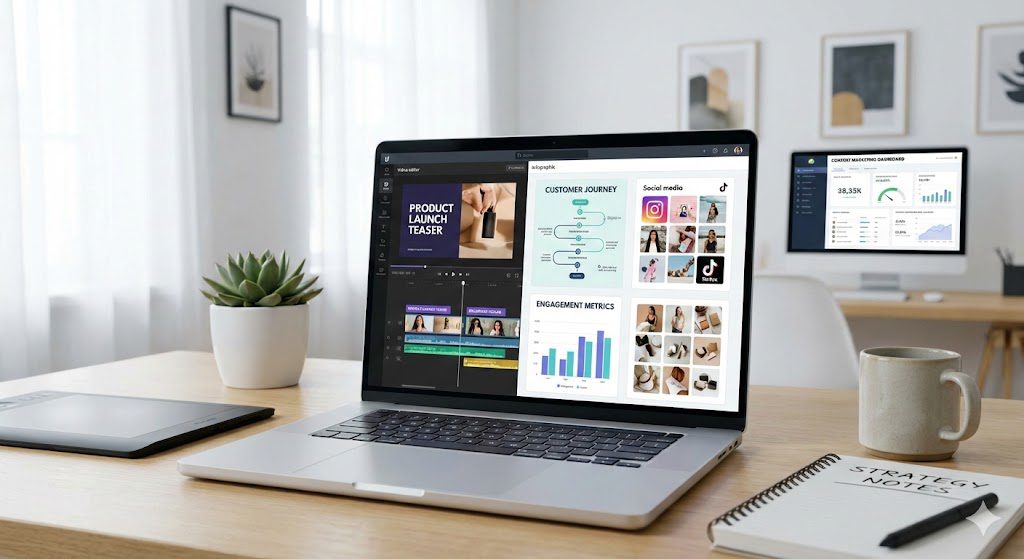
In an increasingly saturated digital landscape, capturing and sustaining audience attention has become one of the biggest challenges for marketers. Visual content has emerged as one of the most effective tools to overcome this challenge, enabling brands to communicate faster, engage more deeply, and convert more consistently than text alone. Modern content marketing is no longer about producing more content—it’s about producing content that is immediately engaging, memorable, and actionable. Visual assets play a central role in achieving that goal. How Visual Content Shapes Audience Attention and Behavior Why the Human Brain Responds Faster to Visuals The human brain processes visual information significantly faster than text, allowing people to understand images almost instantaneously. Research summarized in Brain Rules by John Medina shows that humans are wired to prioritize visual stimuli, making images and videos far more effective at capturing attention than written content alone. This cognitive advantage explains why visual elements often determine whether users stay on a page or scroll past it. The Role of Visuals in Memory Retention Visual content also improves information recall. According to research referenced by the Nielsen Norman Group, people remember substantially more information when it is paired with relevant visuals compared to text-only formats. Visual cues help anchor information in long-term memory, making marketing messages more effective over time. Business Value of Visual Content in Content Marketing Driving Higher Engagement Across Digital Channels Visual content consistently outperforms text-only content in engagement metrics. Data frequently cited by Twitter/X internal analyses shows that posts containing images generate significantly more interaction than those without visuals. Similarly, HubSpot reports that visual-first social posts receive higher likes, shares, and comments across platforms. Higher engagement signals relevance to algorithms, increasing organic reach and visibility. Improving Conversion Performance Visual content doesn’t just attract attention—it influences action. According to Wyzowl’s Video Marketing Statistics, video content on landing pages can dramatically improve conversion rates by helping users understand products faster and with greater confidence. Videos, product visuals, and explainer graphics reduce friction in the decision-making process, which directly supports lead generation and sales. Strengthening Brand Trust and Credibility High-quality visuals contribute to perceived professionalism. Studies from the Nielsen Norman Group indicate that users associate visual quality with brand credibility, particularly on websites and landing pages. Poor visuals, on the other hand, can negatively impact trust—even if the written content is strong. Why Visual Content Outperforms Text-Only Marketing Visuals Capture Attention in Crowded Feeds Social feeds are designed for speed. Visual content allows brands to communicate a message before users consciously decide whether to engage. This aligns with findings from Content Marketing Institute (CMI), which emphasizes that visuals are essential for cutting through content overload. Emotional Connection and Storytelling Images and videos are more effective at evoking emotion than text alone. Emotional responses are a key driver of sharing behavior, which helps explain why visual content is more likely to be shared on social platforms, as noted in multiple HubSpot and CMI reports. Adaptability Across Marketing Channels Visual assets are highly versatile. A single design can be reused across blog posts, social media, email campaigns, presentations, and paid ads. This multi-channel adaptability increases content ROI while maintaining consistent brand messaging. Core Types of Visual Content Used in Content Marketing Images and Branded Graphics Images remain the foundation of visual marketing. Original photography, branded illustrations, and custom graphics help differentiate content while reinforcing brand identity. Video Content and Short-Form Visuals According to Wyzowl, a majority of consumers prefer learning about products through video rather than text. Short-form videos, in particular, are effective for education, storytelling, and product demonstrations. Infographics for Data and Education Infographics simplify complex information by combining visuals and concise text. Content Marketing Institute highlights infographics as one of the most shared content formats due to their clarity and visual appeal. User-Generated Visual Content User-generated content (UGC) builds authenticity. Research cited by Nielsen shows that consumers trust peer-created content more than branded messaging, making UGC especially powerful for social proof. Interactive Visual Experiences Interactive visuals—such as quizzes, polls, and interactive infographics—encourage participation. According to Demand Metric, interactive content generates higher engagement than static content by actively involving users in the experience. GIFs and Micro-Animations GIFs add personality and emotional context to digital communication. Platforms like Giphy report strong engagement rates for branded GIFs when used appropriately within social and messaging platforms. Best Practices for Creating High-Impact Visual Content Focus on Clarity Over Complexity Visuals should communicate one primary idea at a time. The Nielsen Norman Group consistently emphasizes simplicity as a core usability principle, warning that overly complex visuals reduce comprehension and engagement. Maintain High Production Quality Low-quality visuals can damage brand perception. Professional imagery, proper lighting, and clear resolution contribute to trust and credibility, especially in competitive markets. Repurpose Content Strategically Repurposing written content into visual formats increases reach without duplicating effort. HubSpot recommends transforming blog insights into visuals to maximize content lifespan across platforms. Integrating Visual Content into a Content Marketing Strategy Align Visuals with Business Goals Every visual asset should support a defined objective—whether that’s awareness, engagement, lead generation, or conversion. Research Audience Preferences Understanding how your audience consumes visual content is critical. As highlighted by marketing case studies shared by CMI, different demographics respond differently to formats such as video, GIFs, or static images. Develop a Consistent Visual Framework Consistency in color, typography, and design reinforces brand recognition and improves long-term recall. Optimize Visuals for Each Platform Each platform has unique specifications and user behaviors. Optimizing visuals for format, size, and context improves performance across channels. Measure, Learn, and Iterate Performance analysis is essential. Visual content strategies should evolve based on real engagement, traffic, and conversion data. Measuring the Effectiveness of Visual Content Engagement Metrics Likes, shares, comments, and saves provide insight into how audiences respond emotionally and socially to visual content. Click-Through Performance Click-through rates help measure how effectively visuals drive traffic and interest beyond initial engagement. Conversion Outcomes Tracking form submissions, purchases, or downloads reveals whether visual content supports business goals. Tools such as Google
Marketing Automation vs Manual Campaigns: What Works Best

Introduction Marketing today feels a bit like juggling while riding a bike. You need speed, balance, and focus—all at once. That’s why so many teams ask the same question: marketing automation vs manual campaigns what works best? Some marketers lean toward automation because it saves time and scales fast. Others stick with manual execution because it feels more human and creative. Both approaches can work. Both can fail. The real challenge lies in knowing when to use each one. This guide breaks it all down in plain language. You’ll see how marketing automation and manual marketing campaigns actually perform in the real world, where they shine, where they struggle, and how smart teams combine them for better results. No hype. No jargon. Just clear answers you can use. Understanding Marketing Automation in Simple Terms Marketing automation is the use of automated marketing tools to run campaigns with minimal manual effort once everything is set up. You design workflows. The system does the repetitive work. Think of it like programming a coffee machine. You choose the beans, set the strength, and schedule the brew. After that, it runs on its own. What digital marketing automation usually includes Most modern systems support: Email marketing automation with autoresponders Trigger-based campaigns based on user behavior CRM-based marketing and lead scoring models Marketing workflow automation across channels Platforms like HubSpot, Marketo, ActiveCampaign, Mailchimp, and Salesforce Marketing Cloud fall into this category. They connect customer data, messaging, and analytics into one system. Why automation exploded in popularity According to industry research, companies using automation for lead nurturing campaigns often see higher lead conversion rates and better campaign efficiency. Automation supports lifecycle marketing, where prospects receive relevant messages at each stage of their journey. It’s not magic. It’s consistency at scale. Marketing Automation vs Manual Campaigns What Works Best for Efficiency? Efficiency is where automation usually wins first. With campaign automation vs manual execution, automated systems can: Send thousands of emails in seconds Adjust campaign timing optimization automatically Track engagement metrics analysis in real time Maintain message consistency across channels Manual campaigns, on the other hand, rely on hands-on campaign management. Every step takes time. Every adjustment needs human input. That said, efficiency doesn’t always mean effectiveness. Automation saves time and cost savings only when workflows are designed well. Poor setup can waste just as much money—only faster. The Strength of Manual Marketing Campaigns Manual marketing campaigns rely on people making decisions at every step. You choose the audience. You craft the message. You adjust on the fly. It’s like cooking without a recipe. You taste, tweak, and trust your instincts. Where manual execution truly shines Manual campaigns work especially well for: One-off promotional campaigns Bespoke marketing strategies for high-value clients Custom campaign execution that needs creative control Real-time human adjustments during live events Manual audience targeting allows marketers to react instantly to context. A trending topic. A sudden market shift. A sensitive moment. Automation struggles here. The hidden cost of manual work However, manual vs automated email marketing shows a clear trade-off. Manual campaigns often lack scalability. As your audience grows, so does the workload. Consistency becomes harder. Mistakes slip in. That’s why many teams eventually hit a ceiling with purely traditional methods. Marketing Automation vs Manual Campaigns What Works Best for Personalization? This is where things get interesting. At first glance, manual campaigns seem more personal. A human writes the message. A human decides who gets it. But modern automation supports personalized messaging at scale. Using behavioral targeting and segmentation and targeting, systems can tailor messages based on: Pages viewed Emails opened Products purchased Funnel stage Dynamic content personalization allows two users to receive the same campaign with different headlines, offers, or calls to action. Manual personalization feels deeper. Automated personalization reaches further. The best results usually come from combining both. Campaign Automation vs Manual: A Side-by-Side Comparison Here’s a simple comparison to make things concrete. Automation excels at: Scalable marketing operations Real-time data tracking Multichannel marketing orchestration Predictable campaign timing optimization Manual campaigns excel at: Creative storytelling Human judgment and nuance Custom offers and messaging Immediate feedback loops Most competitors stop here. They treat this like a binary choice. That’s the mistake. Marketing Automation vs Manual Campaigns What Works Best for ROI? Return on investment matters more than preferences. Automation often drives ROI optimization through: Reduced labor costs Faster execution Better data-driven decision making Industry benchmarks consistently show higher customer engagement growth when automation supports marketing funnels with drip campaigns and event-triggered emails. Manual campaigns can also deliver strong ROI, especially when: Targeting a small, high-value audience Running limited-time offers Launching new or experimental ideas The key difference lies in repeatability. Automation wins over time. Manual campaigns win in moments. When to Use Marketing Automation (And When Not To) Knowing when to use marketing automation saves frustration. Automation works best when: You have a growing contact list Your customer journey mapping is clear You need consistent lead nurturing campaigns You rely on CRM automation platforms Automation struggles when: Campaign goals change daily Creativity matters more than scale Data quality is poor Many failures blamed on automation actually stem from bad inputs. Garbage in. Garbage out. Benefits of Manual Marketing Campaigns You Shouldn’t Ignore The benefits of manual marketing campaigns don’t disappear in a digital-first world. Manual efforts provide: Strong creative control Authentic human voice Flexible responses to real-world events In automation vs personalization in marketing, manual work still sets the emotional tone. It shapes brand voice. It builds trust in early-stage relationships. Automation amplifies. Humans originate. Hybrid Marketing Campaign Strategies: The Real Winner Here’s what most competitors miss: the future isn’t automated vs traditional marketing. It’s hybrid. High-performing teams use: Automation for workflows, data, and delivery Manual input for strategy, creativity, and oversight For example: Automated email marketing handles onboarding sequences Humans step in for sales outreach and high-value offers AI-powered automation scores leads Marketers review and adjust based on insight This balance drives conversion rate improvement without losing authenticity. Tools That Support
How Brands Are Winning Gen Z Through Meme Marketing
Scroll through TikTok, Instagram, or X for five minutes. You’ll see jokes, remixes, screenshots, and ironic captions flying past at lightning speed. That’s not noise. That’s culture. And right now, how brands are winning Gen Z through meme marketing comes down to one simple idea: brands that feel human earn attention. Gen Z grew up online. Memes aren’t a trend to them. They’re a language. When a brand uses meme marketing well, it doesn’t feel like advertising. It feels like participation. That difference matters in an attention economy where ads get skipped in seconds. In this guide, you’ll learn why meme marketing works, how top brands do it without sounding cringe, and what most marketers still get wrong. Along the way, we’ll connect psychology, internet culture marketing, and real-world brand memes into one practical playbook. Why Meme Marketing Fits Gen Z Like a Glove Gen Z doesn’t separate “online” from “real life.” Their humor, identity, and social validation live inside digital spaces. Memes sit right at that intersection. Unlike polished brand ads, memes: reward insider knowledge rely on shared context invite peer-to-peer sharing That’s why humor-based advertising outperforms stiff brand messaging with younger audiences. Memes feel earned. Ads feel forced. At a deeper level, meme marketing taps into participatory culture. Gen Z doesn’t want to watch brands. They want to interact with them. When you post a meme, you’re handing the mic to the community. They remix it, comment on it, and share it as part of their online identity expression. Think of memes as digital shorthand. One image can communicate frustration, excitement, or irony faster than a paragraph ever could. How Brands Are Winning Gen Z Through Meme Marketing on Social Platforms Not all platforms work the same way. Smart brands tailor their social media meme marketing to fit the native culture of each channel. Platform-native humor matters Gen Z can smell recycled content instantly. Posting the same meme everywhere rarely works. Here’s how strong brands adapt: TikTok meme trends rely on audio, facial reactions, and fast timing. Brands jump in quickly or stay out. Instagram meme pages favor relatability and shareability. Think screenshots and carousel-style jokes. X (Twitter) brand humor thrives on wit, timing, and replies. Short, sharp jokes win here. Reddit meme communities reward authenticity. Corporate polish gets punished. YouTube Shorts meme content blends humor with visual storytelling in under 60 seconds. Snapchat Gen Z engagement leans toward casual, behind-the-scenes humor. Winning brands don’t force memes into platforms. They let platforms shape the meme. How Brands Are Winning Gen Z Through Meme Marketing Without Sounding Fake Here’s the hard truth. Most brands fail at meme marketing because they try too hard. Authenticity and brand voice sit at the center of success. Gen Z doesn’t expect brands to be perfect. They expect them to be self-aware. Strong internet culture marketing follows a few unspoken rules: Don’t explain the joke. Don’t jump on sensitive topics for attention. Don’t pretend to be “one of the kids.” Duolingo meme marketing works because the brand embraced absurdity and leaned into its mascot. Wendy’s Twitter strategy succeeds because the voice stays consistent and playful. Ryanair social media memes work because they exaggerate their flaws instead of hiding them. Each brand chose a lane. Then they stayed in it. The Psychology Behind Why Meme Marketing Works for Gen Z Memes succeed because they align with how Gen Z processes content. Short attention spans need fast rewards Gen Z scrolls fast. Memes deliver instant payoff. One glance. One laugh. Done. Humor creates emotional connection Humor lowers resistance. When people laugh, they listen. That emotional connection with audiences makes brand messages feel lighter and more memorable. Social validation drives sharing Sharing a meme signals identity. It says, “This is me.” That’s powerful. Peer-to-peer sharing does more than any paid placement. Cultural relevance builds trust Trend-driven content shows awareness. It tells your audience you’re paying attention. That alone builds credibility. In simple terms, memes work because they respect the audience’s intelligence. Meme Marketing Examples for Brands That Get It Right Let’s break down a few standout approaches without repeating case-study clichés. Netflix meme campaigns Netflix uses screenshots from its own shows. That keeps content platform-native and rights-safe. The humor feels observational, not promotional. Spotify Wrapped memes Spotify turns user data into shareable stories. That’s user-generated content (UGC) at scale. People do the marketing for them. Ryanair social media memes Ryanair leans into irony and self-deprecation. Instead of hiding complaints, they joke about them. That honesty feels refreshing. Duolingo meme marketing The owl breaks the fourth wall. Sometimes it’s helpful. Sometimes it’s chaotic. Either way, people talk about it. Notice the pattern. These brands don’t chase every trend. They remix culture through their own lens. How Brands Are Winning Gen Z Through Meme Marketing Using Community Power Memes don’t live in isolation. They live in communities. Online community marketing plays a massive role in Gen Z engagement through memes. The best brands don’t just post. They respond. They stitch. They reply. This creator-led brand communication turns audiences into collaborators. Ways brands invite participation: Replying with memes instead of corporate statements Encouraging remix culture Featuring fan-created memes Letting creators speak in their own voice When the community feels seen, loyalty follows. Risks of Meme Marketing Most Brands Ignore Meme marketing isn’t risk-free. And pretending otherwise leads to public embarrassment. Timing is unforgiving Ephemeral meme trends die fast. Posting late feels out of touch. Cultural context matters A joke in one community can offend another. Internet humor and irony require care. Brand safety still counts Not every meme fits every brand. Humor should punch up, not down. Over-automation kills soul AI-generated memes can help with ideas. They shouldn’t replace human judgment. Smart brands build guardrails. They know when to join in and when to stay quiet. Best Platforms for Meme Marketing in 2025 and Beyond Youth marketing trends point toward faster cycles and niche communities. Here’s what’s shaping the future: Smaller, niche meme communities outperform mass appeal Real-time marketing
The Rise of Short-Form Video Platforms: TikTok, Reels, and Beyond
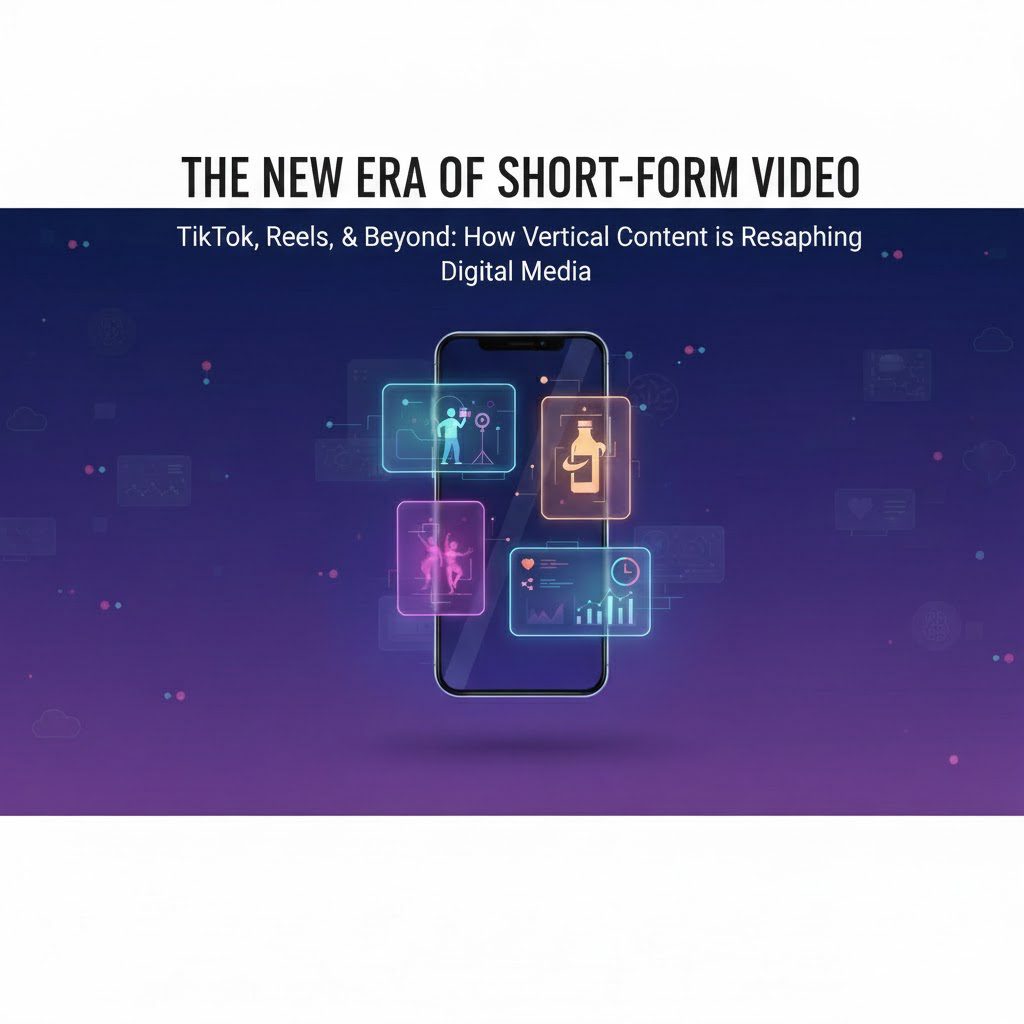
Introduction: Short Videos Didn’t Just Go Viral — They Changed Behavior Pull out your phone. Open a social app. You’re instantly greeted by a vertical video playing without permission. That moment captures the rise of short form video platforms TikTok Reels and beyond in action. Short videos didn’t quietly enter social media. They stormed it. They changed how platforms rank content, how creators grow audiences, and how brands sell products. More importantly, they reshaped how you consume information. This isn’t about trends anymore. It’s about behavior. Mobile-first habits. Scroll-based consumption. Algorithm-driven discovery that feels almost psychic. Let’s explore how short-form video platforms reached this point, why they work so well, and what comes next. The Rise of Short Form Video Platforms TikTok Reels and Beyond: How It All Started Social media once rewarded patience. Long captions. Blog links. Ten-minute videos. Then smartphones took over daily life. As mobile use increased, platforms faced a problem. People wanted content faster. Shorter. Easier to digest. That pressure created short video apps designed for: Vertical video format One-handed scrolling Immediate emotional payoff TikTok accelerated this shift. Instagram Reels and YouTube Shorts followed quickly. The rest of the industry had no choice but to adapt. Why Short-Form Video Platforms Match Modern Attention The attention economy favors speed Your attention is limited. Platforms compete for it aggressively. Short-form video content wins because it delivers value fast. A study from the American Psychological Association notes that frequent digital multitasking reduces sustained attention. Short videos fit this reality instead of fighting it.Source: https://www.apa.org/monitor/2019/01/attention Snackable video content feels effortless You don’t plan to watch short videos. You fall into them. That’s the magic. One swipe equals one idea. No commitment. No decision fatigue. Just flow. Think of it like grazing instead of sitting down for a full meal. Algorithm-Driven Content Discovery Changed the Rules From followers to behavior Modern social media video platforms care less about who you follow and more about how you behave. They track: Watch time Replays Shares Scroll speed Those signals feed AI-powered recommendations that personalize every feed. MIT Technology Review explains how recommendation systems increasingly shape online behavior by predicting engagement patterns. Why creators benefit You don’t need fame. You need relevance. A new creator with one strong clip can outperform established accounts. That shift powered the modern creator economy. At SalesBouncer, we don’t just edit videos. We engineer them to capture attention, hold interest, and drive action. In a world where people scroll fast and decide faster, your video has seconds to perform. That’s where we come in. We specialize in high-impact video editing designed for short-form platforms, ads, and social media marketing—where results actually matter. The Rise of Short Form Video Platforms TikTok Reels and Beyond: Platform Breakdown TikTok: The Engine of Viral Video Platforms TikTok operates as an entertainment-first platform. Social connections come second. Strengths include: Advanced content personalization Powerful in-app editing tools Trending audio and sounds that fuel discovery Hashtag-based discovery layered on AI signals According to DataReportal, TikTok users spend an average of 34 hours per month on the app, one of the highest engagement rates in social media. That time-on-platform explains why brands invest heavily in TikTok-first campaigns. Instagram Reels vs TikTok: Strategic Differences Instagram Reels plays a different role inside Meta Platforms’ ecosystem. Instagram Reels advantages Deep integration with Facebook and Instagram ads Strong social commerce features Familiar environment for brands TikTok advantages Faster trend cycles Better organic reach for unknown creators More experimental content culture For polished brand storytelling, Reels often wins. For raw, culture-driven growth, TikTok still leads. YouTube Shorts Growth: Discovery Meets Search Intent YouTube Shorts benefits from something unique: search behavior. Shorts live inside Google’s ecosystem, which means content can surface through recommendations and search results. According to Statista, YouTube reached over 2.7 billion monthly active users globally, giving Shorts massive distribution potential. Creators also gain long-term value by funneling Shorts viewers into long-form content. Other Short-Form Video Platforms Worth Watching Beyond the big three, several mobile-first video platforms continue to evolve. Snapchat Spotlight: Strong for Gen Z and real-time engagement Facebook Reels: Effective for mass-market reach Likee: Popular in South Asia and parts of Europe Triller: Music-focused with creator monetization tools Not every platform will dominate globally. But regional growth matters for brands with international audiences. Why Short-Form Video Marketing Works for Businesses Engagement beats impressions Short videos optimize for engagement metrics like watch time and shares. That matters more than raw views. A report from HubSpot shows video content generates higher ROI than static formats across most industries. Influencer marketing feels native Influencer marketing thrives on short videos because they feel personal. Instead of scripted ads, creators show products in real life. That authenticity builds trust. Social Commerce and Brand Collaborations Short-form platforms collapse the funnel. You discover a product. You see it used. You buy it. All inside one app. This shift powers: Social commerce Creator monetization Performance marketing McKinsey highlights social commerce as one of the fastest-growing digital sales channels globally. Short Video Content Trends Shaping 2025 and Beyond AI-generated short videos AI now assists with captions, edits, and even full video creation. That lowers barriers and increases volume. Interactive video features Polls, Q&A stickers, and tap-based choices boost real-time engagement. Immersive video experiences AR effects and interactive overlays expand digital storytelling beyond flat screens. Platform algorithm changes Completion rate and retention now matter more than hashtags alone. Quality wins. The Rise of Short Form Video Platforms TikTok Reels and Beyond: What Others Miss Most articles chase virality tips. They miss the bigger picture. Short-form video platforms succeed because they align with: Mobile user behavior Scroll-based consumption The psychology of the attention economy This isn’t a content trend. It’s a behavioral shift. How Brands Can Win With Short-Form Video Content A strong content marketing strategy focuses on clarity and speed. Best practices: Hook viewers in the first 2 seconds Focus on one idea per video Design for vertical video platforms Track watch time, not vanity metrics Repurpose UGC
SEO or PPC? How to Choose the Right Strategy in 2026
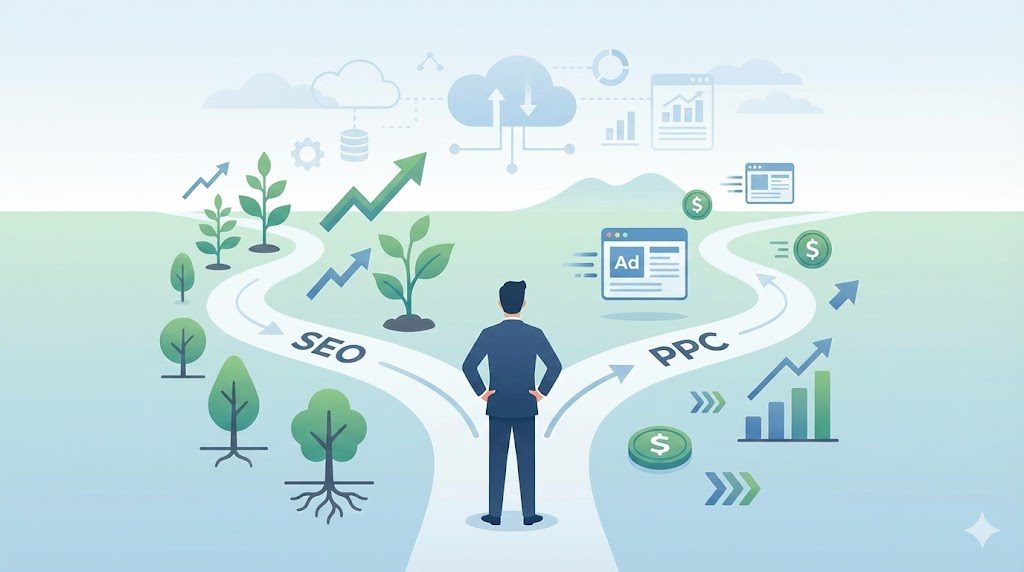
If you’re growing a business online, one question always shows up sooner or later: how to choose between SEO and PPC.Both promise traffic. Both can bring leads. And both can quietly drain your budget if you pick the wrong one at the wrong time. Think of this decision like choosing transportation. SEO is walking toward a destination that keeps getting closer. PPC is grabbing a taxi that gets you there fast. Neither is wrong. The problem starts when you choose speed when you need endurance—or patience when you need urgency. This guide breaks it all down in plain language. You’ll learn how each channel works, where competitors go wrong, and how to decide based on goals, timelines, and budget—not guesswork. Understanding SEO and PPC Before You Choose Before comparing tactics, you need clarity. Many businesses struggle because they treat SEO and PPC as interchangeable. They aren’t. What SEO Really Does for Your Business SEO helps your website appear in organic search results when people look for answers, services, or products. Instead of paying for every click, you earn visibility by proving relevance and credibility over time. Good SEO focuses on: Creating helpful, search-driven content Improving site speed and usability Earning trust through links and brand mentions Over time, SEO turns your website into a digital asset. Traffic keeps coming even when campaigns pause. According to Backlinko, the first organic Google result gets nearly 28% of all clicks, showing how powerful top rankings can be. What PPC Actually Brings to the Table PPC advertising places your message in front of users instantly. You pay when someone clicks. That’s the deal. This model shines when: You need traffic right now You’re launching something new You want tight control over targeting However, the moment spending stops, visibility disappears. PPC is more like renting attention than owning it. Average Google Ads cost per click sits around $2–$3, although competitive industries often pay much more. How to Choose Between SEO and PPC Based on Your Goals Many guides oversimplify this choice. They say “SEO is long term” and “PPC is fast.” That’s true—but incomplete. Let’s go deeper. Choose SEO If You’re Playing the Long Game SEO works best when: You want sustainable growth Your audience researches before buying You’re building brand authority For example, a consultant writing helpful guides builds trust slowly. Over time, those articles attract qualified leads without constant ad spend. SEO compounds. Each strong page supports the next. Choose PPC If Timing Is Everything PPC makes sense when: You need leads immediately You’re running limited-time offers Demand spikes seasonally An ecommerce store clearing inventory doesn’t have months to wait. Ads let them move fast. Speed has a price, though. Without careful targeting, costs climb quickly. Budget Reality Check: What Most Competitors Get Wrong Here’s what many articles don’t tell you. Most businesses fail not because SEO or PPC doesn’t work—but because they misalign budget with expectations. SEO Costs What You Don’t See SEO rarely charges per click. However, it still costs money: Content creation Technical fixes Tools and expertise The payoff arrives later, but it’s often stronger. PPC Costs What You Feel Immediately With PPC, spending is obvious. Every click shows up in reports. That visibility is useful, but it also creates pressure. When results slow down, budgets often rise to compensate. This is where many competitors panic and overspend. Traffic Quality: Not All Clicks Are Equal Traffic volume means nothing without intent. SEO Traffic and User Trust People trust organic results more than ads. They see them as earned, not bought. That trust matters. Research from Smart Insights shows organic search drives over half of all website traffic, while paid search contributes far less.https://www.smartinsights.com/search-engine-marketing/seo-statistics/ SEO visitors often: Spend more time on site Explore multiple pages Convert after repeated exposure PPC Traffic and Buying Intent PPC attracts users ready to act. Someone searching “buy CRM software today” likely wants solutions now. That urgency explains why PPC often converts faster—even if fewer people click overall. Conversion Rates: Short-Term Wins vs Long-Term ROI Conversion rate depends on industry, intent, and experience. Still, patterns emerge. PPC Conversions Happen Faster Ads work well for: Product launches Emergency services High-intent searches However, cost per conversion rises in competitive markets. SEO Conversions Grow Over Time SEO conversions start slower. Yet as authority builds, conversion rates often improve. A study by First Page Sage shows SEO outperforms PPC in conversion rates across many industries over time. Longevity: Which Channel Keeps Paying You Back? This question alone answers how to choose between SEO and PPC for many businesses. SEO Builds Durable Assets Once a page ranks, it can generate traffic for years with updates and maintenance. That’s leverage. PPC Stops the Moment You Stop Paying No budget means no traffic. Simple as that. PPC is powerful—but temporary. The Smarter Strategy Most Competitors Miss: Using Both Together Here’s where this article delivers extra value. Many competitors frame SEO and PPC as rivals. Smart marketers treat them as teammates. How PPC Improves SEO Reveals high-converting keywords Tests messaging before content creation Identifies audience pain points How SEO Reduces PPC Costs Improves landing page quality scores Builds brand familiarity Lowers dependency on paid traffic Together, they create balance. Speed plus sustainability. Decision Framework: How to Choose Between SEO and PPC Step by Step Use this simple checklist: Timeline: Do you need results now or later? Budget: Can you afford ongoing ad spend? Competition: How crowded is your market? Customer journey: Do buyers research or buy fast? Growth goals: Short-term sales or long-term authority? Your answers guide the choice. Common Myths That Confuse the Decision “SEO Is Free” It isn’t. It’s an investment. “PPC Is Only for Big Companies” Small businesses use PPC every day—carefully. “You Must Pick One” You don’t. FAQs About Choosing SEO and PPC How to choose between SEO and PPC for a small business? Start with SEO if budgets are tight and timelines are flexible. Add PPC for quick wins once messaging is clear. Is SEO or paid search
What Are the Most Effective Digital Marketing Strategies?
Digital marketing changes so quickly that even seasoned marketers feel like they’re trying to jump onto a moving train. New platforms launch, algorithms shift, and customer expectations evolve faster than ever. Yet one question refuses to go away: What are the most effective digital marketing strategies today—and which of them actually drive ROI for US businesses? This guide breaks everything down in a practical, actionable way. You’ll explore proven digital marketing strategies, the most effective digital marketing methods, and advanced online marketing techniques that consistently help companies increase traffic, generate leads, and boost online sales. You’ll also see how data-driven marketing, AI in digital marketing, and omnichannel customer experiences are reshaping the landscape. Understanding What Effective Digital Marketing Strategies Really Mean Before you pick channels or build campaigns, take a moment to understand the foundation. A digital marketing strategy is not a random set of online advertising tactics. It’s a carefully planned roadmap that helps you improve your online presence, drive traffic, and convert users across multiple touchpoints. A strategy answers questions like: Who are you talking to? What do they care about? Why should they pay attention to you instead of a competitor? Which online marketing channels drive the highest ROI? How will you measure success? In other words, think of your strategy as the navigation system for your marketing engine. Tactics are simply the turns you take along the way. US businesses rely more heavily on a digital marketing plan today because consumer behavior has shifted dramatically. People shop, compare, research, complain, and buy online—often across five or more channels before making a final decision. Without a strategy, you’re not invisible, but you’re certainly forgettable. Why You Need a Digital Marketing Strategy Before You Spend a Dollar Jumping into promotion without a plan is like pouring water into a bucket with holes. You burn money fast, but little gets absorbed. A structured digital marketing plan helps you focus on what matters, whether that’s customer acquisition strategies, brand awareness techniques, or performance marketing tactics that improve conversions. A smart strategy protects your budget by: Eliminating guesswork Prioritizing high-ROI channels Streamlining messaging Using data to guide direction Improving consistency across every touchpoint The US market demands a higher level of precision. Competition is intense, and consumers can recognize poorly executed online branding strategies a mile away. An effective strategy allows you to compete with brands that may have deeper pockets but lack direction. Core Components of an Effective Digital Marketing Strategy Before we explore the most effective digital marketing strategies, let’s lay the groundwork. Define Your Audience and Buyer Personas Every powerful campaign starts with clarity. You must know who you’re targeting and what motivates them. US consumers expect personalized digital marketing experiences—generic messaging simply won’t cut it. Build personas using: Demographics (age, income, location) Psychographics (motivations, beliefs, lifestyle) Behavioral insights (search habits, purchase triggers) Pain points and emotional drivers When you understand how people search, scroll, shop, and decide, you’re able to design audience engagement tactics that feel natural, not forced. Map Out Customer Journeys for Every Stage Customers move through multiple stages: awareness, interest, consideration, evaluation, decision, and retention. Each phase requires different content and communication styles. Here’s a simple way to visualize the journey: Funnel Stage Goal Best Online Marketing Methods Awareness Increase brand visibility Content marketing, SEO, social media Consideration Educate and build trust Email nurturing, video marketing strategy Decision Convert leads into buyers PPC campaigns, CRO tactics Retention Keep users coming back Personalization, automation, loyalty programs Mapping this journey helps you deliver messages that resonate instead of hoping users magically convert. Audit Your Existing Digital Presence Before building anything new, inspect what you already have. Evaluate: Website usability and mobile experience SEO performance (technical, on-page SEO practices, backlinks) Current social media marketing campaigns Email marketing automation sequences Paid ads performance Content gaps that impact search intent An audit often uncovers big surprises—like outdated landing pages hurting conversions or low-intent keywords attracting the wrong visitors. Fix these early, and your strategy becomes far more effective. Establish Clear, Measurable Goals Good strategies rely on KPIs that truly matter. Avoid vanity metrics such as likes or impressions. Focus on: Conversion rate optimization (CRO) Cost per acquisition Email click-through rates Audience engagement Revenue per lead Lifetime value (LTV) When goals reflect real business outcomes, your marketing efforts become much smarter. Use Analytics and Data to Guide Every Decision Guesswork is expensive. Marketing analytics tools help you see exactly what’s working and what needs improvement. Data-driven marketing lets you track user behavior, identify patterns, and refine campaigns instead of “hoping for the best.” This is also where AI in digital marketing is transforming the landscape. AI can predict behavior, suggest keywords, automate segmentation, and improve personalization in digital marketing—boosting ROI with less effort. What Are the Most Effective Digital Marketing Strategies? (Top Methods That Actually Work) Now let’s break down the strategies that consistently produce results across industries in the US. 1. Content Marketing: The Most Effective Long-Term Digital Marketing Strategy Content marketing remains king because it builds trust, improves organic visibility, and drives inbound leads without ongoing ad spend. A powerful content marketing strategy includes: High-value blog posts Case studies and industry reports Video tutorials and webinars Ebooks and guides Infographics and visual storytelling User-generated content Well-crafted content supports every other digital channel, making it one of the most profitable online marketing strategies available today. 2. Search Engine Optimization (SEO): The Backbone of Effective Online Marketing Techniques SEO remains the most cost-effective way to increase website traffic and attract customers with a genuine intent. SEO includes three main pillars: On-Page SEO Practices Keywords targeting US search intent Optimized headings, URLs, and alt text Internal linking to boost relevance Technical SEO Fast load times Mobile-friendly structure Clean site architecture Indexing and crawl efficiency Off-Page SEO High-quality backlinks Brand mentions Local citations When implemented correctly, SEO becomes essential for customer acquisition strategies and long-term growth. 3. Social Media Marketing Campaigns: Fast, Engaging, and Highly Shareable Social media drives massive visibility because
8 Best SEO Service Companies in Sharjah to Boost Your Online Presence in 2025
In the competitive digital landscape of Sharjah, businesses are increasingly turning to SEO (Search Engine Optimization) to gain visibility, drive traffic, and increase sales. With the ever-changing algorithms and evolving trends, finding the right SEO service provider is crucial. In this article, we will explore the 8 best SEO service companies in Sharjah that can help businesses improve their online presence in 2025. 1. SalesBouncer: Sharjah’s Leading SEO Experts SalesBouncer is one of the top SEO service providers in Sharjah, specializing in driving traffic and increasing conversions for businesses across various industries. They offer a tailored approach to SEO with the following services: Why Choose SalesBouncer for SEO in Sharjah? 2. MegaByte: Sharjah’s SEO Specialists for All Businesses MegaByte is another prominent SEO service provider in Sharjah, offering holistic digital marketing services. Their key offerings include: Why MegaByte Stands Out in Sharjah? 3. SERPMaxx: Premier SEO Service Providers in Sharjah SERPMaxx is known for its cutting-edge SEO strategies. Their services are tailored to businesses of all sizes, focusing on: Why Choose SERPMaxx for SEO in Sharjah? 4. One Time SEO Company: Sharjah’s Unique SEO Solution If you’re looking for one-time SEO services without ongoing contracts, One Time SEO Company is the right choice. Their SEO package includes: What Makes One Time SEO Company Special? 5. The Educationist Hub Media Pvt. Ltd.: Sharjah’s SEO Excellence The Educationist Hub Media offers premium SEO services tailored to Sharjah businesses, focusing on: Why Partner with The Educationist Hub Media? 6. Indeed SEO: Local SEO Experts in Sharjah Indeed SEO specializes in local SEO, making it one of the best choices for businesses in Sharjah targeting local customers. Their services include: Why Indeed SEO is Perfect for Local Businesses in Sharjah? 7. Codedm2: Reliable SEO Solutions for Sharjah Businesses Codedm2 offers reliable and effective SEO strategies to help Sharjah businesses grow their online presence. Their services include: Why Codedm2 is Ideal for Sharjah-Based Businesses? 8. eMarketing Egypt: Boosting SEO in Sharjah with Proven Methods eMarketing Egypt is another top contender in Sharjah’s SEO market, offering a wide range of services that include: What Makes eMarketing Egypt Stand Out? Conclusion: Choose the Best SEO Service for Your Sharjah Business Choosing the right SEO company in Sharjah is crucial for improving your online visibility and achieving your digital marketing goals. Whether you are a small local business or a large enterprise, the 8 best SEO service companies in Sharjah highlighted above offer tailored solutions to help you succeed in the competitive online market. Take Action Now! FAQs About SEO Services in Sharjah 1. What Is SEO and Why Is It Important? SEO is the process of optimizing your website to rank higher in search engine results, helping you attract more organic traffic and customers. It’s essential for improving online visibility. 2. How Do I Choose the Right SEO Company in Sharjah? Look for companies with proven experience, transparent pricing, a portfolio of successful projects, and expertise in your industry or niche. 3. How Long Will It Take to See SEO Results? SEO is a long-term strategy. While you may see improvements in traffic within a few months, significant results usually take around 6-12 months depending on competition. 4. Are SEO Services Expensive in Sharjah? The cost of SEO services varies based on the scope of work, but many SEO companies in Sharjah offer scalable packages to fit different budgets. 5. What Are the Benefits of Local SEO for Sharjah Businesses? Local SEO focuses on improving rankings for geo-targeted search terms, ensuring your business is found by local customers looking for your products or services.
Digital Marketing Trends Every Business Should Watch This Year (2025 Edition)
Introduction As digital channels evolve and consumer behavior shifts, staying ahead of the curve is essential for businesses in 2025. From AI-powered tools to cookieless tracking and immersive content, this year’s digital marketing trends are reshaping how brands connect, engage, and convert. Whether you’re a small business owner or a marketing leader, understanding these trends can help you future-proof your strategy, boost ROI, and stay competitive. Here are the top digital marketing trends every business should watch in 2025 — and how to leverage them for real results. 1. AI-Driven Marketing Takes Center Stage Artificial intelligence (AI) is no longer futuristic — it’s foundational. Tools like ChatGPT, Jasper, Midjourney, and Google Gemini are enabling faster content creation, smarter automation, and better audience insights. How it’s being used: What to Do: 2. Search Goes Visual and Conversational In 2025, people are searching with images, voice, and natural language more than ever. Trends to Watch: What to Do: 3. Short-Form Video Content Still Reigns Platforms like TikTok, Instagram Reels, and YouTube Shorts continue to dominate in 2025 — and video marketing is non-negotiable. Why it works: What to Do: Tip: Don’t overthink it — authentic, low-production videos often outperform polished ones. 4. Privacy-First Marketing in a Cookieless World With the phaseout of third-party cookies and increased privacy laws (like GDPR and CPRA), marketers must focus on first-party data and ethical tracking. What’s changing: What to Do: 5. Personalized Experiences Using First-Party Data In the wake of privacy regulations, personalization is shifting toward first-party data (data you collect directly from users). Examples: What to Do: 6. Rise of Micro-Influencers and Creator Marketing Influencer marketing is still strong in 2025, but the power is shifting to micro and nano influencers with highly engaged niche audiences. Why Micro-Influencers Work: What to Do: 7. Email Marketing is Evolving (and Still Winning) Email is far from dead — in fact, it remains one of the highest ROI marketing channels. 2025 Trends: What to Do: 8. Voice and Audio Content Are Growing Channels Voice-based content is becoming more popular, especially in search, smart assistants, and podcasts. Why It Matters: What to Do: 9. Social Commerce is Exploding Social media platforms like Instagram, TikTok, and Pinterest now enable users to buy directly from the app. Why It Works: What to Do: 10. Emphasis on Sustainability and Brand Values Modern consumers care about more than price — they care about purpose. Brands that emphasize social responsibility, diversity, and sustainability build deeper loyalty. Examples: What to Do: 11. Immersive Experiences with AR and VR Augmented Reality (AR) and Virtual Reality (VR) are becoming more mainstream in digital marketing — especially for retail, real estate, and education. Use Cases: What to Do: 12. Customer Experience (CX) is a Top Priority In 2025, marketing success is directly tied to how frictionless, helpful, and enjoyable your customer experience is. Trends: What to Do: Conclusion Digital marketing in 2025 is more dynamic, personalized, and experience-driven than ever. Whether it’s adapting to AI tools, adjusting to privacy changes, or embracing immersive content, businesses that stay agile and trend-aware will lead the pack. By keeping these trends on your radar — and taking action — you’ll position your brand for smarter growth and stronger engagement this year and beyond.
What to Expect When Hiring a Digital Marketing Agency
Introduction Hiring a digital marketing agency can be a game-changer for your business. Whether you’re looking to increase website traffic, generate leads, boost sales, or build a stronger online presence, the right agency can deliver measurable, long-term results. But what does the process really look like? What should you expect — from the first meeting to campaign execution and performance tracking? In this article, we’ll walk you through what to expect when hiring a digital marketing agency, including services offered, communication standards, costs, and results — so you can make an informed, confident decision. 1. Initial Discovery and Consultation What Happens: Your first interaction with an agency usually includes a discovery call or consultation. During this phase, the agency will: What You Should Expect: Pro Tip: Come prepared with your business goals and any analytics data you have (e.g., traffic sources, conversion rates). 2. Marketing Audit and Strategy Proposal What Happens: After the consultation, the agency often conducts a comprehensive audit of your: Then, they’ll present a custom strategy proposal tailored to your goals and budget. What You Should Expect: This is your chance to assess the agency’s expertise and create. 3. Onboarding and Goal Setting What Happens: Once you agree to move forward, the agency begins onboarding. This includes: What You Should Expect: Pro Tip: Ask about reporting frequency and tools used to track performance (Google Analytics 4, SEMrush, HubSpot, etc.). 4. Service Execution (What They Actually Do) Depending on your package or objectives, digital marketing agencies can handle a wide range of services: Common Services Include: What You Should Expect: 5. Transparent Communication and Reporting What Happens: The agency should keep you updated regularly with: What You Should Expect: Pro Tip: Look for agencies that focus on business outcomes (like leads or ROI), not just vanity metrics (likes, impressions). 6. Timeframe for Results Digital marketing is not overnight magic — but results do come with the right execution. What You Should Expect: A good agency sets realistic expectations and helps you track progress clearly. 7. Flexible Strategy Adjustments The best agencies don’t “set it and forget it.” They: What You Should Expect: 8. Pricing and Contracts Pricing Models Vary: What You Should Expect: Pro Tip: Be wary of agencies that offer “guaranteed rankings” or too-good-to-be-true pricing. 9. Long-Term Partnership Potential Most digital marketing wins happen over time. A great agency is a long-term partner, not a one-time vendor. What You Should Expect: 10. Real Results That Align with Business Goals At the end of the day, the right agency helps you grow — not just rank on Google or post pretty content. Success Metrics May Include: What You Should Expect: Final Thoughts: Choose Wisely, Grow Confidently Hiring a digital marketing agency in 2025 is about more than just outsourcing — it’s about partnering with professionals who understand how to grow brands in a fast-changing digital world. By knowing what to expect — from onboarding to execution and reporting — you can approach the process with clarity and confidence.
Why Every Business Needs a Digital Marketing Agency in 2025
Introduction In 2025, digital transformation is no longer optional — it’s essential. As technology evolves and customer expectations shift, businesses that fail to adapt to digital marketing are likely to be left behind. From startups to global enterprises, companies need more than just a website or social media page — they need a strategic, data-driven digital presence that grows with them. That’s where a digital marketing agency becomes not just a helpful partner, but a vital one. In this article, we’ll explore the top reasons why every business needs a digital marketing agency in 2025, what services they offer, and how they help you stay ahead in a highly competitive landscape. 1. Expertise That Evolves With the Industry The digital landscape is constantly changing — from Google algorithm updates to emerging platforms like Threads or evolving ad policies on Facebook. A digital marketing agency keeps up with: Why it matters: In-house teams often lack the time or bandwidth to stay current. Agencies specialize in staying ahead. 2. Cost-Effective Access to a Full Team of Specialists Hiring an in-house team for every marketing function — SEO, design, content, PPC, and analytics — is expensive. An agency provides access to: You pay for results, not overhead. Agencies are especially helpful for small to mid-sized businesses that need high-level skills without high-level salaries. 3. Scalable Solutions for Growing Businesses Whether you’re launching a new product or entering a new market, digital marketing agencies offer flexible strategies that scale with your business needs. For example: Scalability means you never outgrow your marketing strategy. 4. Access to Premium Tools and Data Analytics Top agencies invest in high-quality software and analytics tools that most small businesses can’t afford alone, such as: These tools help: 5. Save Time and Focus on Core Business Goals Running a business already demands your full attention. Marketing requires strategy, testing, design, content, and constant adjustments. Letting an agency handle it frees you up to: Let the experts handle growth while you handle the business. 6. Stay Ahead of Competitors Your competitors are likely working with professionals to improve their visibility and grow their reach. If you’re relying on outdated methods, you’re missing out. A digital marketing agency helps you: In 2025, visibility is everything — and agencies know how to put you in front of the right people at the right time. 7. Multi-Channel Strategy for Maximum Impact Customers interact with brands across many platforms — websites, social media, email, search engines, and even messaging apps. A good digital marketing agency builds an integrated, omnichannel strategy including: This unified approach ensures consistent messaging and higher engagement. 8. Data-Driven Decision Making Agencies make decisions based on data — not gut feeling. They analyze: Using these insights, they tweak strategies to continuously improve performance. No more wasted budgets. Just optimized campaigns with measurable ROI. 9. Custom Strategies Tailored to Your Business There is no one-size-fits-all in digital marketing. Agencies create personalized plans based on: Whether you’re B2B, B2C, local, or global — a tailored strategy ensures you reach the right audience with the right message. 10. Proven Track Record and Industry Experience Established digital agencies bring years of experience across industries. They know what works, what doesn’t, and how to adapt when things change. Look for an agency that offers: This experience translates into faster results, smarter strategies, and fewer missteps. Bonus: Adaptation to AI and Automation in Marketing In 2025, artificial intelligence plays a larger role than ever in digital marketing — from content generation to ad targeting and predictive analytics. Agencies are equipped to use: Businesses that don’t adopt these tools risk falling behind — agencies can help you get there. Conclusion: Invest in Growth, Not Just Marketing A digital marketing agency is not just a service provider — it’s a growth partner. In 2025, where digital is at the heart of every customer interaction, having expert guidance is more crucial than ever. Whether you’re launching a brand, scaling up, or trying to outshine the competition, an agency brings strategy, creativity, and technology together to deliver real, sustainable results.
Top 10 Digital Marketing Strategies That Drive Real Results (2025 Edition)

Introduction In an increasingly digital-first world, businesses must leverage powerful marketing strategies to remain competitive and relevant. With evolving consumer behavior, algorithm updates, and tech innovations, it’s crucial to stay ahead by implementing approaches that don’t just look good on paper — but actually deliver results. Digital marketing is no longer optional — it’s foundational. From attracting potential customers to nurturing leads and driving conversions, the right strategies can accelerate growth across any industry. This in-depth guide will explore the top 10 digital marketing strategies proven to drive real, measurable results in 2025, with examples, best practices, and insights to help you make smarter marketing decisions. 1. Search Engine Optimization (SEO) What It Is: Search Engine Optimization is the process of optimizing your website to rank higher in search engine results pages (SERPs) organically. It includes on-page SEO, off-page SEO, and technical SEO. Why It Works: Key Components: Tip: Use tools like Google Search Console, Ahrefs, or SEMrush to monitor your keyword rankings and identify opportunities. 2. Pay-Per-Click Advertising (PPC) What It Is: PPC allows businesses to display ads on platforms like Google Ads, Bing, and social media networks. You only pay when someone clicks your ad. Why It Works: Best Practices: Example: An eCommerce brand using Google Shopping Ads can quickly boost sales by appearing at the top of product searches, reaching users who are ready to buy. 3. Content Marketing What It Is: Content marketing focuses on creating and distributing valuable, relevant content to attract and retain a clearly defined audience. Why It Works: Content Types: Pro Tip: Adopt a pillar-cluster content strategy: create long-form “pillar” pages on broad topics and link to shorter, related blog posts. This boosts topical authority and internal linking for SEO. 4. Email Marketing What It Is: Email marketing uses personalized emails to promote products or services, nurture leads, and build customer loyalty. Why It Works: Effective Tactics: Tools: Mailchimp, Klaviyo, ConvertKit, ActiveCampaign 5. Social Media Marketing What It Is: Social media marketing involves using platforms like Facebook, Instagram, LinkedIn, TikTok, and Twitter to reach and engage your audience. Why It Works: Platforms to Consider: Tips for Success: 6. Influencer Marketing What It Is: Influencer marketing involves partnering with online creators or influencers to promote your brand to their audience. Why It Works: Types of Influencers: Pro Tip: Use tools like AspireIQ or Upfluence to find influencers aligned with your brand. 7. Conversion Rate Optimization (CRO) What It Is: CRO is the practice of increasing the percentage of users who take a desired action (purchase, subscribe, download, etc.) on your website. Why It Works: Key Tactics: Example: A SaaS company increased demo sign-ups by 40% after simplifying their homepage and clarifying their CTA. 8. Affiliate Marketing What It Is: Affiliate marketing involves partnering with individuals or companies who promote your product for a commission. Why It Works: How It Works: Platforms: Ideal For: eCommerce, online services, digital products 9. Video Marketing What It Is: Video marketing uses engaging, visual content to explain, entertain, or sell — on platforms like YouTube, TikTok, LinkedIn, and Instagram. Why It Works: Video Ideas: Stats: 10. Marketing Automation What It Is: Marketing automation refers to using software to automate repetitive tasks, such as sending emails, posting on social media, and segmenting audiences. Why It Works: Tools: Common Automations: Example: A fitness brand automates reminders for upcoming online classes, upsells through personalized product suggestions, and thanks loyal customers — all without manual effort. Conclusion Digital marketing isn’t about chasing every new trend — it’s about using strategies that drive actual results for your business goals. By focusing on these 10 powerful strategies — from SEO and PPC to email, video, and automation — you can build a high-performing, scalable, and measurable digital presence. Each of these tactics works even better when integrated into a holistic digital marketing plan that’s aligned with your audience, goals, and budget. Whether you’re managing it in-house or partnering with an agency, these methods can unlock real growth in 2025 and beyond.